
Last Updated on March 4, 2026 by Fadra Nally
Many people assume it must be easy to not only eat healthy but to eat vegetarian in Japan. I’m here to tell you: eating vegetarian in Japan is not always easy, but it is absolutely possible.
I’m not an expert, but I’ve traveled to Japan twice in one year for a total of over three weeks. Most of that time was spent in and around Tokyo, including several popular day-trip destinations.
I’m also not a vegetarian or vegan, but my son (and frequent travel companion) is vegetarian. Given the choice, I’m happy to prioritize his needs over mine. Meat isn’t essential for me to enjoy a good meal.
With that in mind, here are my top tips for finding eating vegetarian in Japan, especially in and around Tokyo, plus a few of our personal favorites.
Consult the Official Guide
Sometimes going straight to the source is the best place to start. Seeing the need to better support vegan and vegetarian visitors, the Tokyo Convention & Visitors Bureau publishes an official Tokyo Vegan & Vegetarian Restaurant Guide every year.
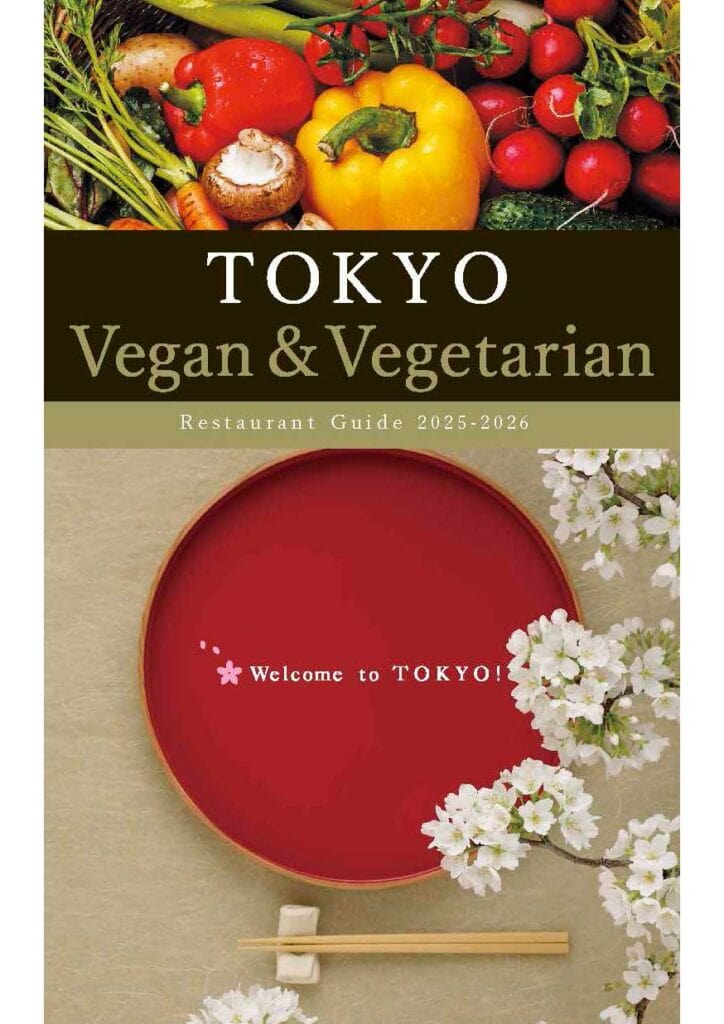
Restaurants in the guide are divided into three categories:
- Category 1: No animal ingredients in any menu item.
→ Best for vegans. - Category 2: No animal ingredients in some menu items.
→ These places have vegan options, but not the entire menu. - Category 3: No meat, fish, crustaceans, or shellfish in some menu items.
→ Best for vegetarians, flexitarians, and mixed groups that include meat eaters.
The guide lists restaurants by category and includes a map, nearest train station, address, hours, website, and approximate price range.
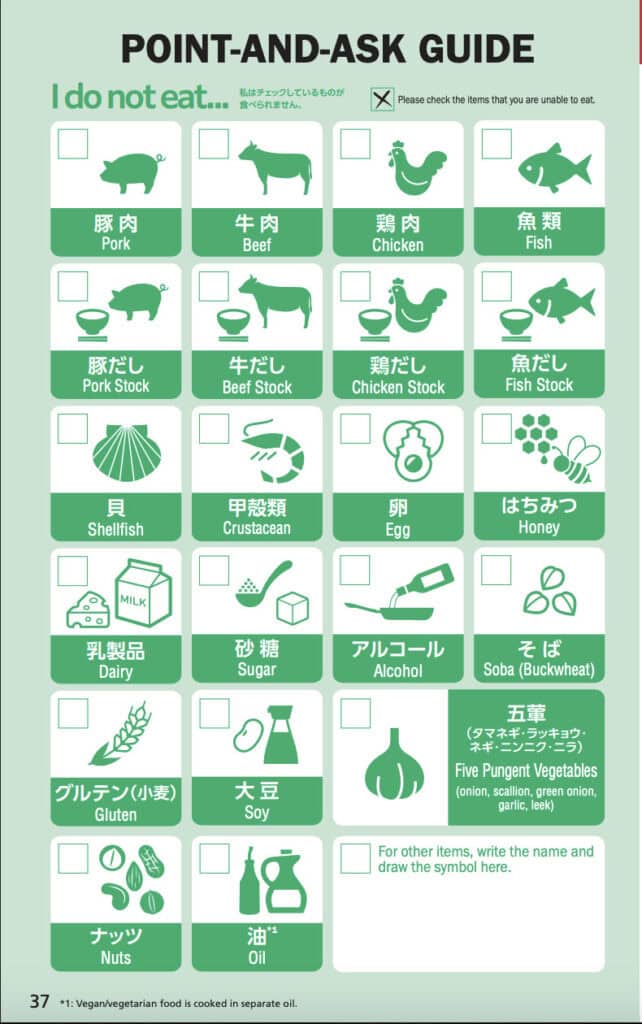
In the back, there’s also a handy “point and ask” sheet you can show restaurant staff to indicate which ingredients you do not or cannot eat. It’s incredibly helpful if you’re not confident in your Japanese.
Use Happy Cow (App and Website)
Happy Cow is both a website and an app that’s invaluable for vegans and vegetarians. I first discovered it while researching how to find vegetarian restaurants in Japan.
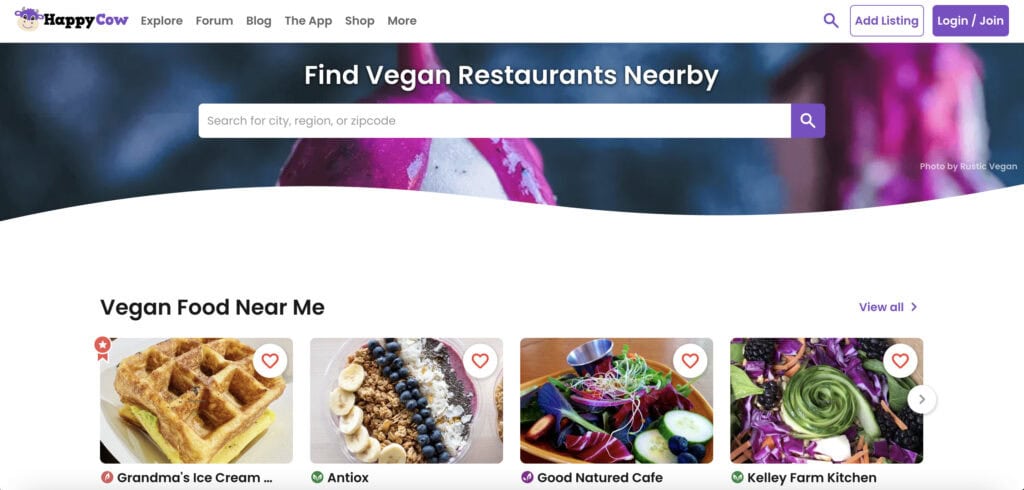
It’s a crowdsourced database of restaurants and grocery stores that offer:
- Vegan food
- Vegetarian food
- Vegetarian-friendly options
The website is free to use, and the app is a one-time purchase (around $4.99).
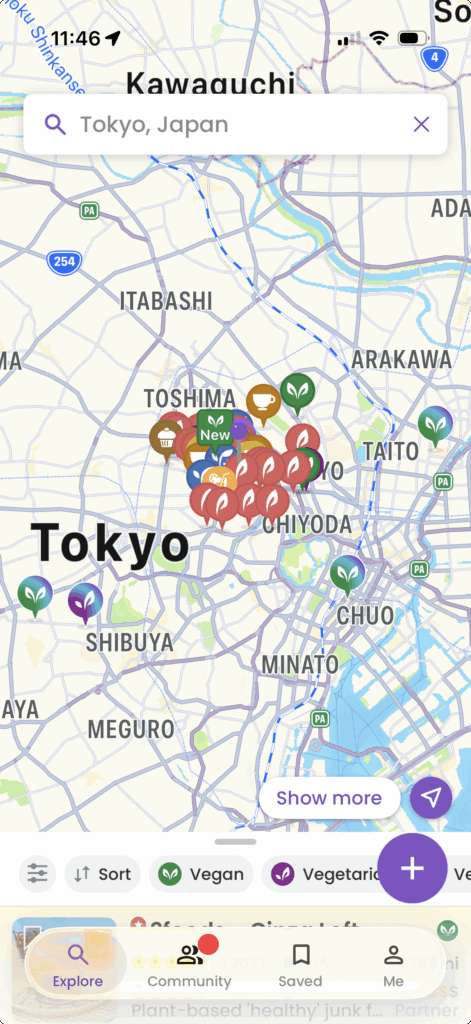
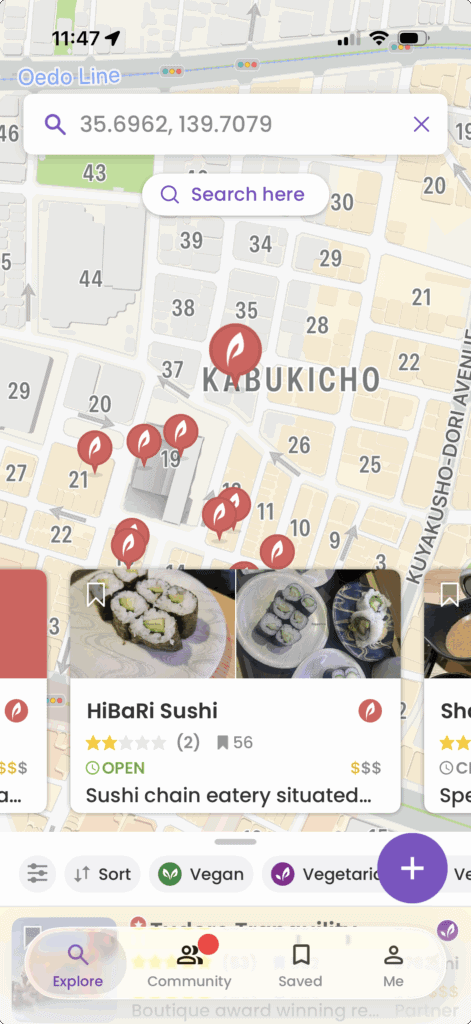
Happy Cow is especially good at helping you find fully vegan or vegetarian restaurants. It’s less helpful if you’re simply looking for regular restaurants that happen to have a few vegetarian items.
Consider it one tool in your toolkit. And if you discover a new spot or have a great meal? Add it to the app and leave a review to help other travelers.
Search Google Maps
During my first trip to Japan, I relied almost entirely on Happy Cow. Because it’s crowdsourced, though, it can sometimes be limited or out of date.
My favorite hack now is to simply open Google Maps and search for:
- “vegan restaurant”
- “vegetarian restaurant”
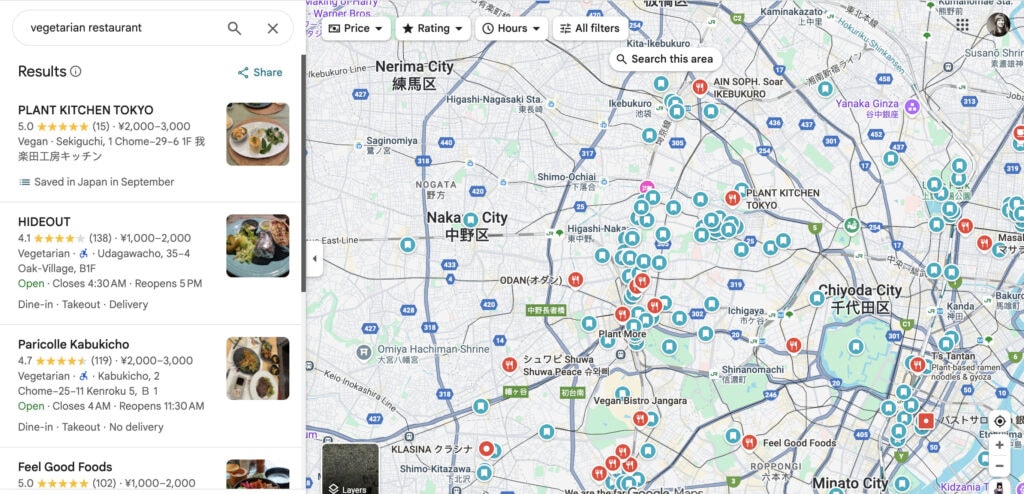
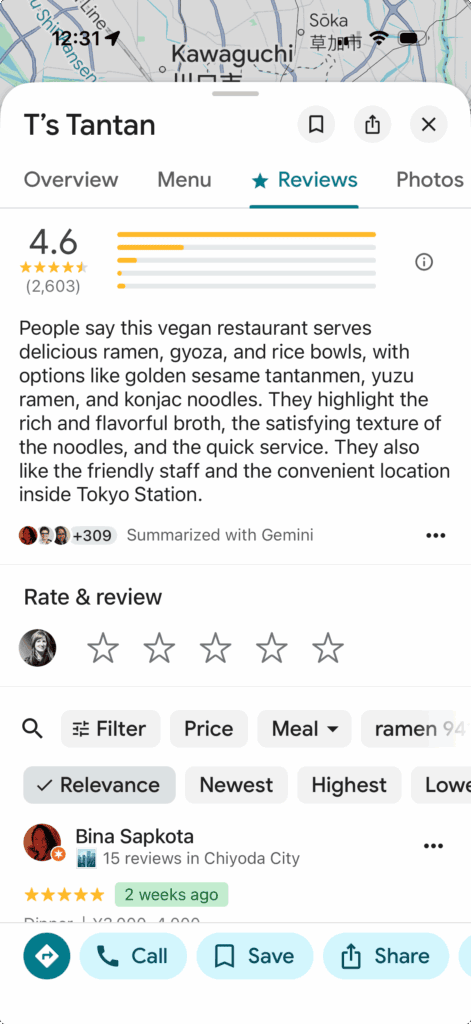
Even if a restaurant isn’t officially tagged as vegan or vegetarian, you’ll often find reviews from customers who mention vegetarian options, substitutions, or how accommodating the staff was.
Read through the comments to see if it sounds like a good fit for your needs. We’ve discovered quite a few delicious spots this way.
My Top Tips For Eating Vegetarian in Japan
1. Lean More Vegan Than Vegetarian
As I mentioned, I’m not vegan or vegetarian, but I’m happy to eat either. If you want to be absolutely sure you’re avoiding meat, your safest bet is often a vegan restaurant.
Vegan spots have become more common and visible in Japan, especially in Tokyo, and they’re more likely to fully understand your dietary needs and restrictions.
2. Always Confirm Your Vegetarian Needs
On one trip, we went to an okonomiyaki restaurant that had vegetarian options on the menu. My son ordered the vegetarian version, but when his cabbage pancake arrived, he was pretty sure there was meat on top.
He asked the server to confirm that it was vegetarian. The server assured him it was – but then added that they had put “just a little meat sauce” on top.
So technically, yes, it was the “vegetarian” item… with meat sauce. Something was definitely lost in translation.
The lesson:
Always double-check, and don’t be afraid to very clearly (and repeatedly) explain what you don’t eat.
Pro tip
Want to make sure you’re enjoying authentic Japanese vegan food? Why not make your own! Sign up for a cooking class while you’re in Tokyo and learn to make gyoza and ramen with vegan ingredients!
Vegan Ramen Class Details3. When in Doubt, Eat Indian Food
One of our most reliable options has been Indian restaurants.
Because many Indian dishes are vegetarian in nature, you can almost always find something safe and satisfying to eat. Fortunately, there are more and more Indian restaurants popping up in Tokyo and the surrounding area.
If you’re having a hard time finding Japanese vegetarian options nearby, search for “Indian restaurant” on Google Maps. It’s saved us more than once..
4. Always Check Your Ingredients
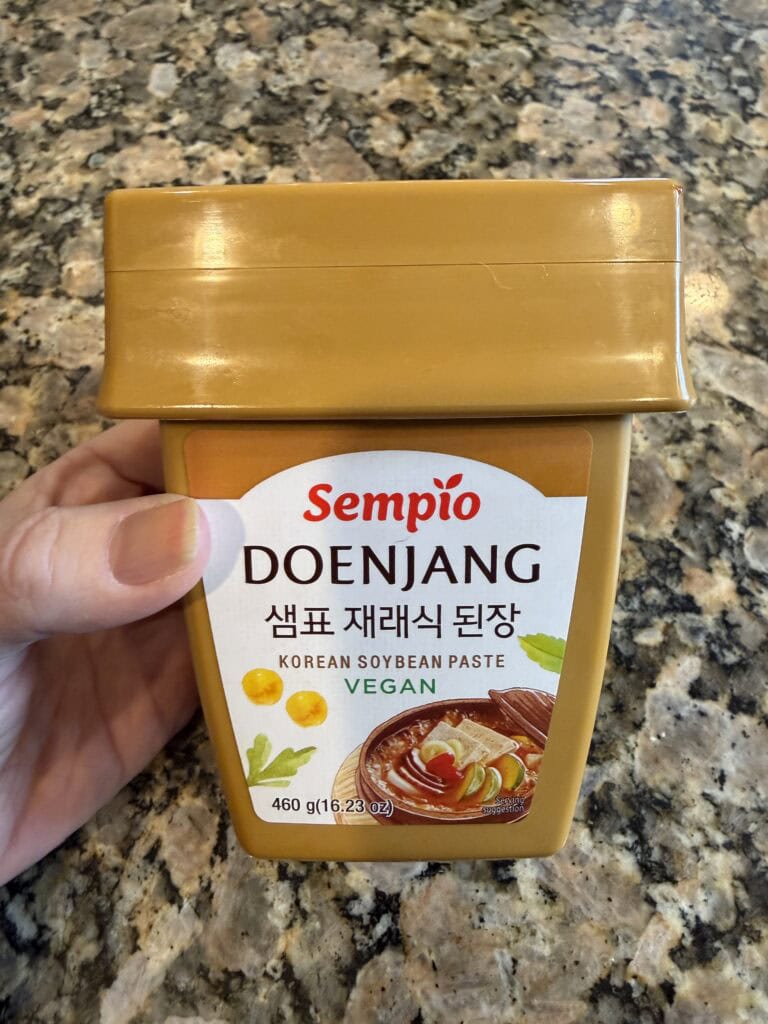
If you have access to a kitchen, or just want an easy meal, buying prepackaged food or simple ingredients from the grocery store can be a good option – especially if you have allergies.
But in Japan, it’s critical to check ingredient labels carefully.
Many foods that look vegetarian are actually made with fish-based seasonings for flavor. This is especially true for dashi, a common broth or seasoning often made from fish.
My recommendation:
- Use Google Translate to scan and translate ingredient labels, or
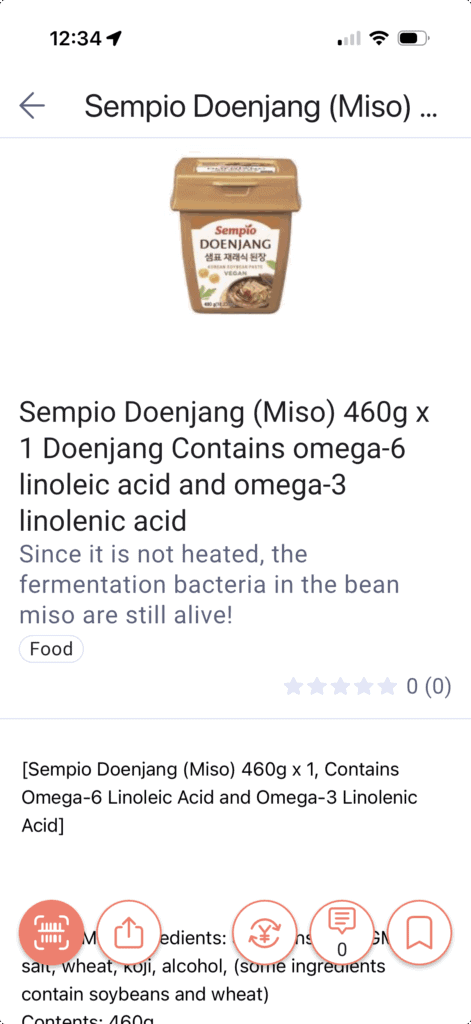
- Use the Payke app, which lets you scan a product’s barcode and see detailed information in your language. Use Payke for iPhone or Payke on Google Play
Payke can be a huge time saver and can help you avoid ingredients you don’t want to consume.
Eating vegetarian in Japan isn’t always straightforward, but it’s absolutely doable with the right tools, a little extra research, and a willingness to be flexible.
In fact, I’ve done a ton of research for you! I’ve eaten my way around Tokyo and beyond and compiled a list of my favorite vegetarian restaurants in Tokyo.
In the meantime, here are some great ways to work up your appetite while in Japan!